


Master's Heritage Level · 30 Years Dedicated Exclusively to One Sandalwood Incense
Master's Heritage Level · 30 Years Dedicated Exclusively to One Sandalwood Incense
Couldn't load pickup availability
-
Ordered
- - -
Order Ready
- - -
Delivered

Master's Heritage Level · 30 Years Dedicated Exclusively to One Sandalwood Incense
Collapsible row
Collapsible row


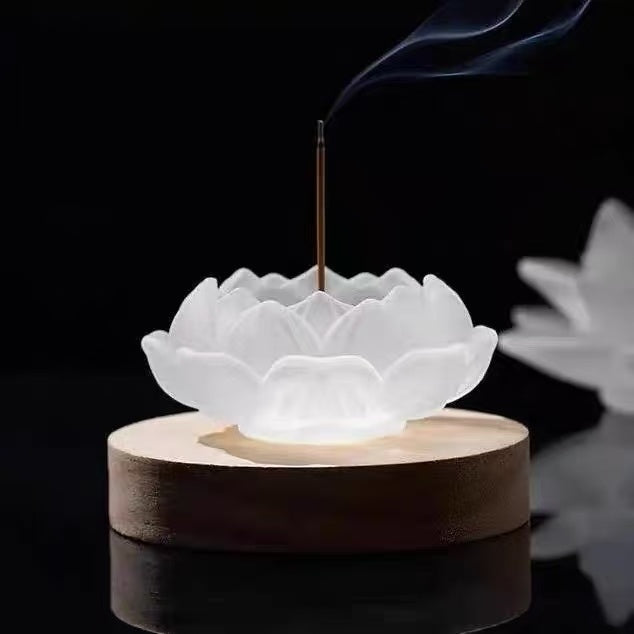
This sandalwood incense may well be themost purely crafted on Chinese soil.
-

For 30 years, its maker has focused on
perfecting just one sandalwood blend. In this lifetime, he vowed to create China's finest sandalwood incense — a product infused with three decades of devotion by a fellow Buddhist practitioner who both walks the spiritual path and crafts incense. -

Approved by over 200 masters, offered in200 temples — its quality speaks for itself.
Monks accustomed to using the finest
sandalwood for offerings have the highest standards. The fact that this incense
has been chosen by so many temples has been recorded by its maker over 30 years
— a honor he regards as his greatest achievement. -

One whiff captivates, the next touchesthe soul.
Having tried hundreds of varieties of
sandalwood incense over the years, I was utterly enchanted by the aroma of this
one. It represents the pinnacle of incense blending in China — an experience that's truly beyond words. Like drinking water, you know its quality only when you taste it — I can only invite you to experience it for yourself. -

China's finest sandalwood — at a commoner's price.
Making top-tier sandalwood affordable to
ordinary people is another heartfelt vow of its creator. This isn't about solitary appreciation, but about benefiting all beings — the pure wish of a 30-year Buddhist practitioner for whom incense
making is spiritual practice, and making just enough to support his family is
sufficient. -

Only one with elevated consciousness cancreate such treasure-like sandalwood.
At this level of mastery, technical
skill becomes secondary — spiritual realization becomes the determining factor. The gap between excellent and transcendent mastery is the distance between earth and heaven. -

Made from authentic Mysore sandalwoodfrom India.
Blended by one of China's most accomplished incense-making practitioners, this sandalwood represents his life's work. Perfect for quiet appreciation, meditation, and mindful practice — it brings peace to the heart and joy to the spirit.


Even though the market has long been
flooded with inferior products over genuine ones, after much consideration, I’ve decided to share this with my friends, because its quality is absolutely irreplaceable in the short term.
In fact, the sandalwood market has already been tarnished by certain players—just about anyone dares to claim they’re selling sandalwood. As one of the four great incenses, sandalwood has almost been discredited.

In this overwhelming flood of information, truly good things are always hard to find. The incense used in the main halls of over 200 temples in China comes from this very artisan. His skill in blending fragrances is undoubtedly top-tier in China, and he is a true inheritor of intangible cultural heritage handmade techniques. Yet, he has always remained low-key, never seeking publicity, simply dedicating himself to the craft he has loved his entire life.

Sandalwood vs. Sandalwood—The Difference Is Vast!
What exactly is the difference between a few dollars’ worth of sandalwood and our Mysore Old Mountain Sandalwood?
The cheap sandalwood, often priced at just a few dollars, typically uses trees from artificially cultivated fast-growth forests, aged less than 10 years. It relies on synthetic fragrances for scent and may even be made from sandalwood sawdust (often leftover scraps from other processing). Mixed with other inferior woods and compressed, the final product is worlds apart from true sandalwood! This is also the reason why some cheap or free incense is so inexpensive. However,
long-term inhalation of such low-quality incense may pose risks like lung cancer.

In contrast, premium sandalwood is
sourced exclusively from wild Old Mountain Sandalwood in Mysore, India. Its fragrance is natural and unfolds in rich, layered notes: a clear, sweet top note, a creamy and dense middle note, and a deep, honeyed finish. As recorded
in the Chen’s Manual of Incense from the Song Dynasty, the scent of sandalwood is "moist and lingering, penetrating to the crown of the head and awakening the spirit."

Have you ever wondered about the
sandalwood used in temples? With just one whiff, it brings peace to the mind
and body. When lit, its aroma is soothing and delicate, evoking the serene atmosphere of a quiet temple. It feels pure and tranquil, offering immense comfort to both body and soul.
But did you know? Not all temples are
willing to burn truly high-quality incense in their main halls. It might be hard to believe, but many monastic practitioners have developed lung-related illnesses due to long-term exposure to harmful substances released by low-quality, chemically-made incense. Prolonged exposure to these toxic scents can indeed cause irreversible harm to the body.

My encounter with this master was trulyserendipitous—one can’t helpbut feel that everything unfolds as it should.
While traveling across the country, I’ve met many kindred spirits, but the connection with this fellow practitioner was especially remarkable. I found him in a secluded residence, tucked away from the city’s hustle and bustle—a true cultivator and a genuine artisan deeply devoted to the art of incense-making.
What first drew me to him was the sandalwood he crafts using a secret recipe. But what truly solidified my trust was his pure and sincere intention.
He has long attained financial freedom and engages in incense-making purely out of passion. Initially, he created incense only for his own use and to share with friends, never for profit. That’s why he spares no effort in selecting the finest materials and follows an exceptionally intricate preparation process. Yet, word of his craftsmanship spread far and wide, and soon, his doorstep was crowded with visitors. There were times when he was so busy making incense that he barely had time to sleep.
His mission has always been to let more people experience truly high-quality incense. It’s not
about wealth or fame—it’s a selfless act of kindness, almost like a spiritual offering. My own wish is to help more people as well—to let sincere practitioners discover these hidden treasures and access them at affordable prices.
Staying true to one’s heart, acting with simplicity and sincerity—this principle applies to both life and the art of making incense.

Our shop uses only pure Mysoresandalwood from India as the raw material. Nowadays, it seems every sandalwoodproduct claims to be from Mysore, India—as if no othertrees grow on those mountains and they endlessly produce nothing butsandalwood... First, let me share some foundational knowledge. What is Mysore?Mysore is a historic city in Karnataka,southern India, renowned for its palace, sandalwood, silk, and otherspecialties—sandalwood in particular. What is "Old MountainSandalwood"?In the market, high-quality sandalwoodproduced in the Mysore region of India is referred to as "Old MountainSandalwood," while sandalwood from Australia, Indonesia, and other regionsis called "New Mountain Sandalwood." New Mountain Sandalwood istypically harvested from younger trees, and its essential oil content andfragrance are slightly inferior to those of Old Mountain Sandalwood.

However, evenamong Mysore Old Mountain Sandalwood, quality varies dramatically. It’s like Zhenxiang from Jianfeng Ridge or Wuchang rice—the truly core production areas are no longer open for harvesting.In the early days, only products from those specific lands were considered themost refined. As brand recognition grows, surroundingregions also benefit from the reputation, but the quality cannot be guaranteedto match that of the core origin. This holds true for rice, for Zhenxiang, andof course, for sandalwood as well.